

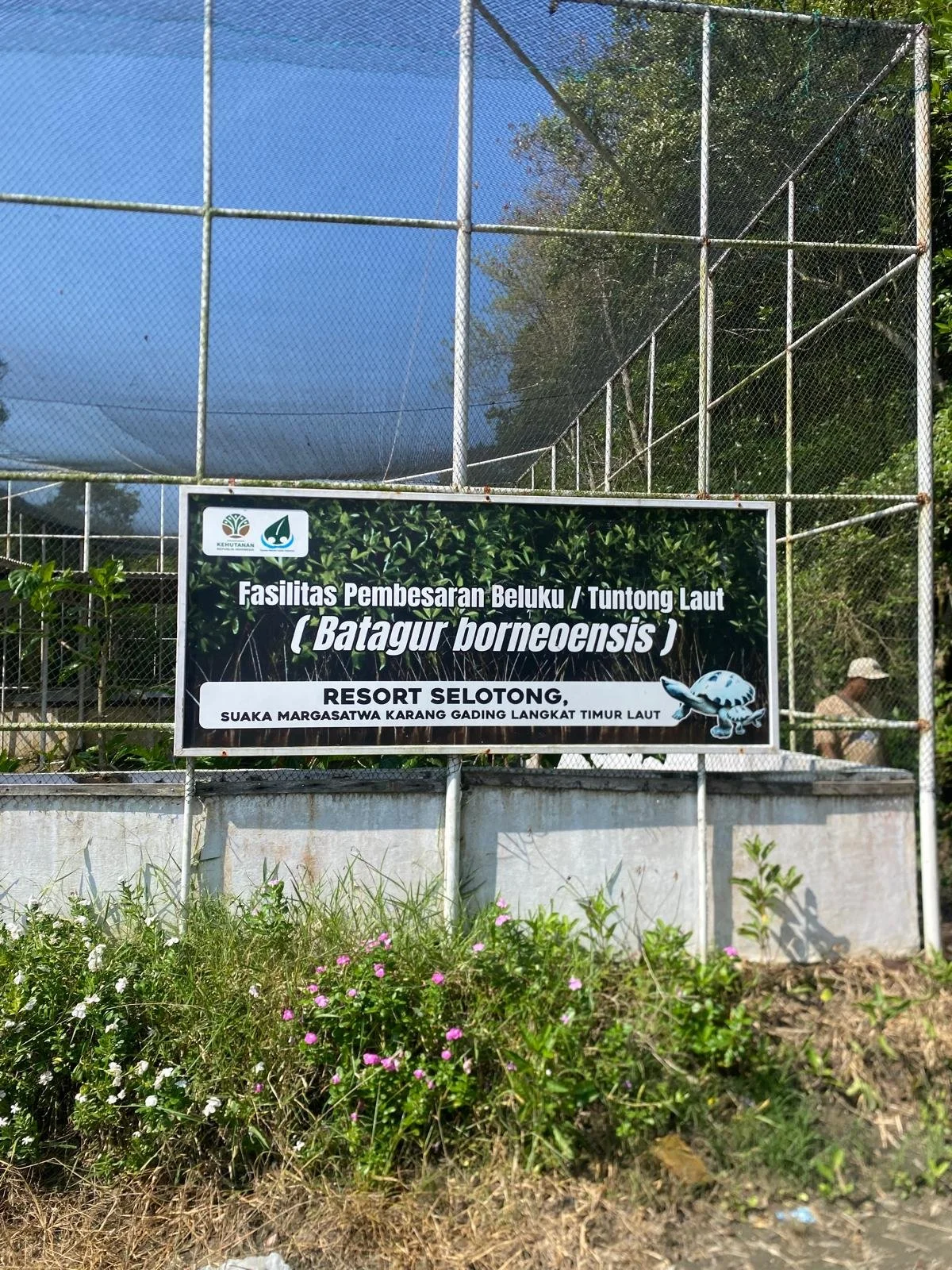
Painted Terrapin head-starting facility at Resort Selotong, Langkat, North Sumatra. Photo credit: Arrum Harahap.
25 November 2026
Just a few months after joining the Asian Species Action Partnership (ASAP), Arrum Harahap began visiting conservation organisations across Indonesia in his role as Indonesia Programme Coordinator. These visits helped him build trust with the people carrying out conservation work, gain a new perspective on the challenges they face, and deepen his understanding of the support they need.
His visits took him to Komunitas Lanun, a fishing community in Tebat Rasau, Belitung; SatuCita in North Sumatra; Yayasan Kinatouan in North Sulawesi; and the Indonesia Herpetofauna Foundation in West Java.
In this second story of the series, Arrum shares his experience visiting Yayasan SatuCita Lestari Indonesia known as SatuCita for short. The organisation is working to protect the Critically Endangered Painted Terrapin. Arrum reflects on the challenges the organisation faced following the devastating floods in Sumatra.
My second visit took place in early August, and it hit very close to home. I went to North Sumatra, where I met Mas Joko Guntoro and his colleagues from SatuCita.
SatuCita previously received support from ASAP’s Species Conservation Fund. The organisation works to protect the Painted Terrapin, locally known as tuntong laut, with conservation activities in Langkat, North Sumatra, and Aceh Tamiang, Aceh.
SatuCita was still dealing with the consequences of the severe floods that struck parts of Sumatra in November 2025. I visited the team in Medan and Langkat, but was unable to travel to Aceh Tamiang, one of the hardest-hit areas, where access remained limited nearly a year after the disaster.
The flooding in Kuala Simpang, Aceh Tamiang, had destroyed SatuCita’s office, along with many organisational documents and records. Its conservation work was also affected. Much of Mas Joko’s time over the previous months had gone into dealing with the aftermath and getting the organisation back on its feet.
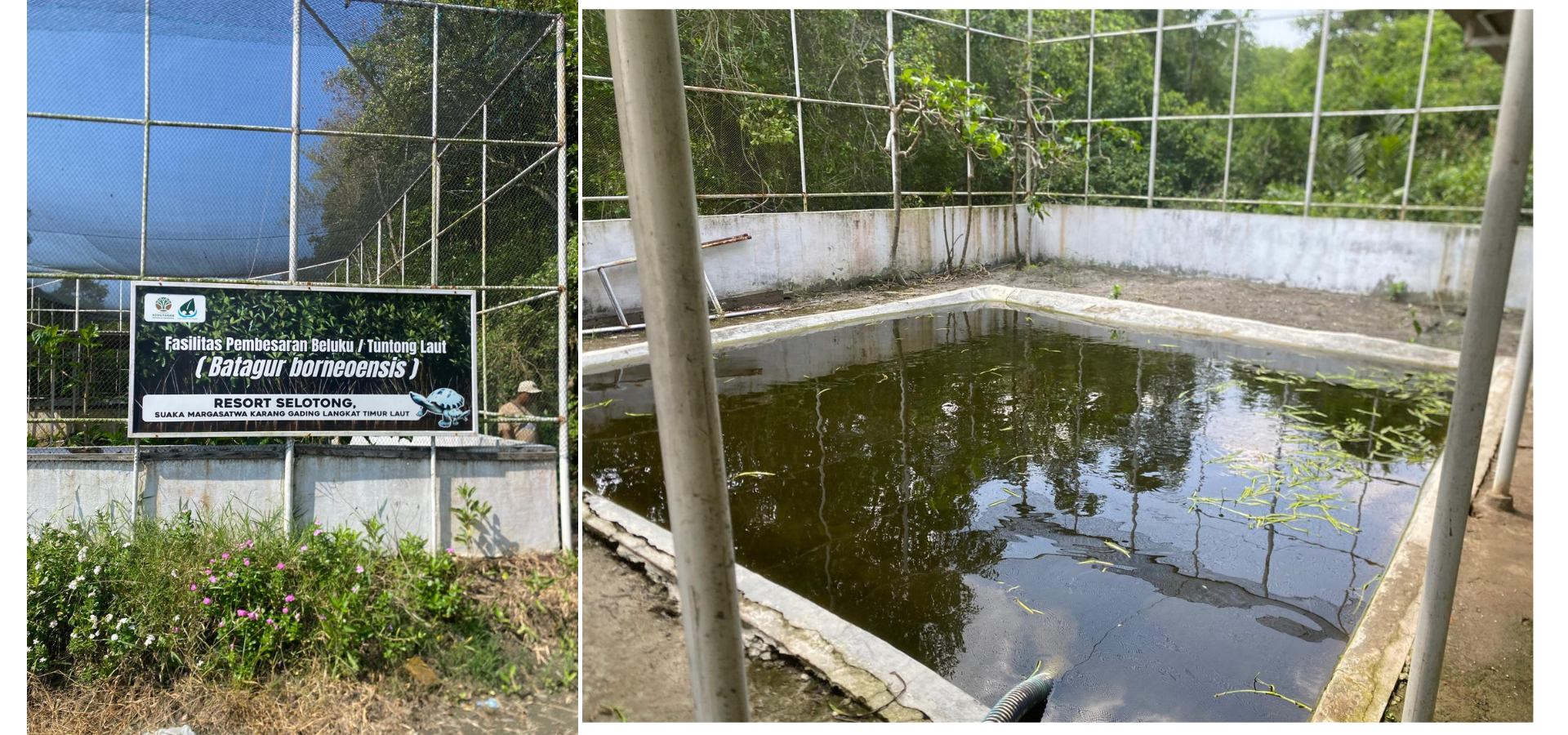
SatuCita’s information center and head-starting facility in Langkat, North Sumatra, which remain operational following the November 2025 floods. Photos: Arrum Harahap.
I was already familiar with the impact of the floods. I was in my hometown in Tapanuli, North Sumatra, when they occurred and later joined the volunteer response. Seeing the effects on communities there gave me some understanding of the scale of the disruption.
My conversation with SatuCita also helped me understand how a disaster affects the day-to-day work of a small conservation organisation, including its staff, facilities, records, and ongoing field programmes.
Despite these challenges, SatuCita has continued its conservation work through close collaboration with local government and the surrounding community, including fishers who play an important role in protecting turtle nesting areas.
Discussions with Mas Joko highlighted that the challenges facing SatuCita extend beyond funding and conservation activities. The floods have added further pressure to an organisation already working with limited resources.
As Programme Coordinator, I often work with conservation organisations through proposals, reports, emails, and online meetings. These are necessary for managing grants and following project progress, but they provide only part of the picture.
Visiting SatuCita gave me a better understanding of the challenges the team was dealing with and how these affected its ability to continue its conservation work. It also made me think more about the support organisations might need to keep up conservation activities when faced with circumstances like these.
This article is the second in a four-part Stories from the Field series, following Arrum Harahap’s visits to conservation organisations during his first year with ASAP. The series features Komunitas Lanun in Tebat Rasau, Belitung; SatuCita in North Sumatra; Yayasan Kinatouan in North Sulawesi; and the Indonesia Herpetofauna Foundation in West Java. Further stories in the series will be published in the coming weeks.