

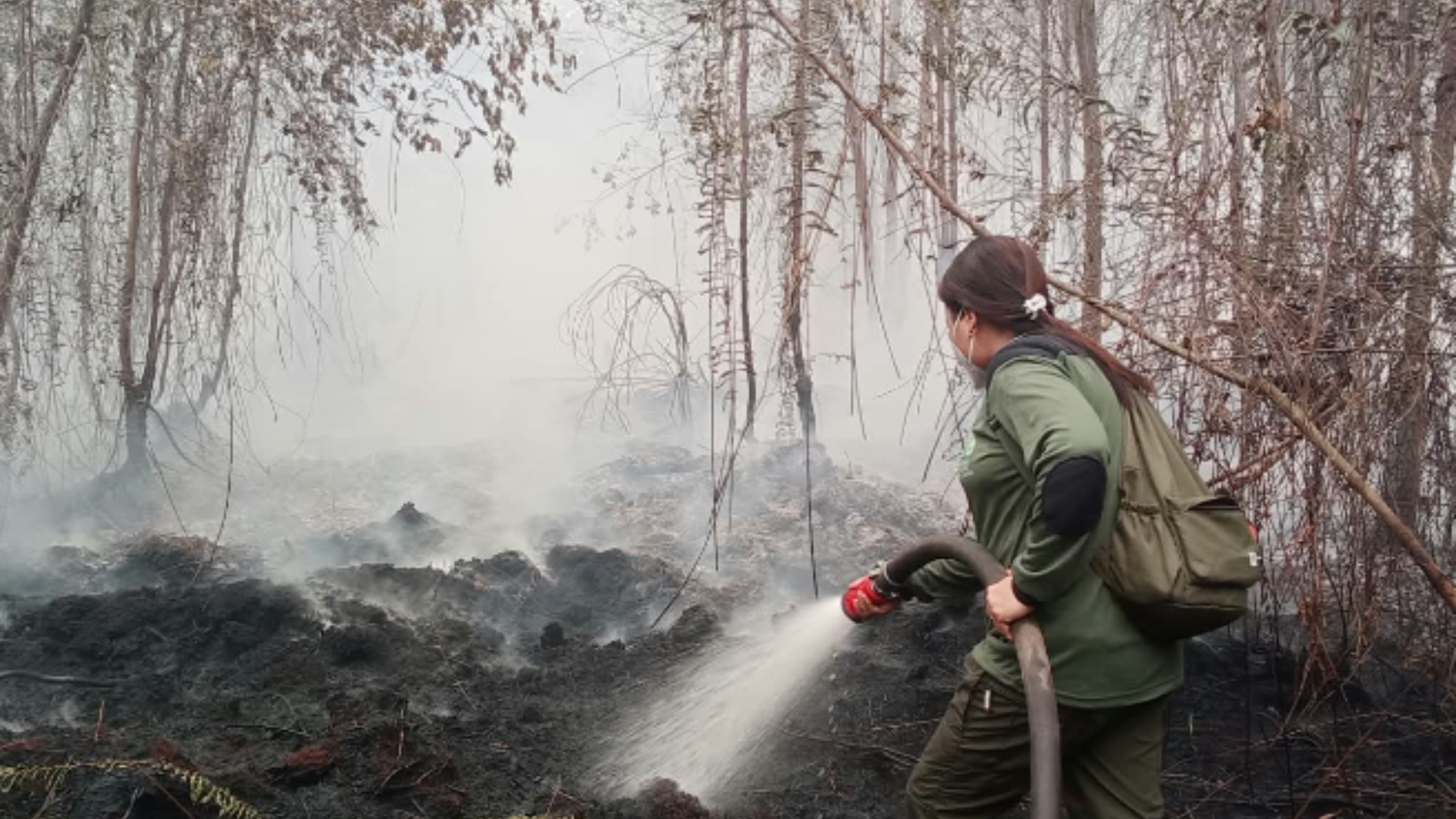
A firefighter sprays water onto smouldering peatland to prevent the fire from spreading into surrounding forest in Central Kalimantan, Indonesia. Photo Credit: Borneo Nature Foundation
25 October 2026
As forest and peatland fires spread across Indonesia, conservation organisations are working to protect threatened wildlife and their habitats. Through its Rapid Action Fund, the Asian Species Action Partnership (ASAP) is supporting two organisations responding to the emergency.
Months of forest and land fires have destroyed wildlife habitats and threatened communities across Indonesia. Kalimantan and Sumatra have been at the centre of the emergency, with fires damaging forests and peatlands that provide habitat for some of the country’s most threatened wildlife.
The Critically Endangered Bornean Orangutan has received considerable media attention due to reports of individuals suffering burns, smoke inhalation, and displacement. Nevertheless, Orangutans are not the sole species at risk.
In Kalimantan, conservation teams have documented 14 Sunda Pangolins found dead in fire-affected areas. The fires also threaten forests that provide habitat for other Critically Endangered species, including the Helmeted Hornbill, which inhabits forests in both Kalimantan and Sumatra.
The impact on other wildlife is also becoming apparent. In coastal Kubu Raya, West Kalimantan, Planet Indonesia recorded at least 16 dead animals, including Silvered Langurs, Long-tailed Macaques and Proboscis Monkeys, between August and September 2026. The organisation also reported dehydrated wildlife moving towards villages and coastal areas as freshwater sources dried up.
“We have never had findings like this before,” Adam Miller, co-founder of Planet Indonesia, told Mongabay.
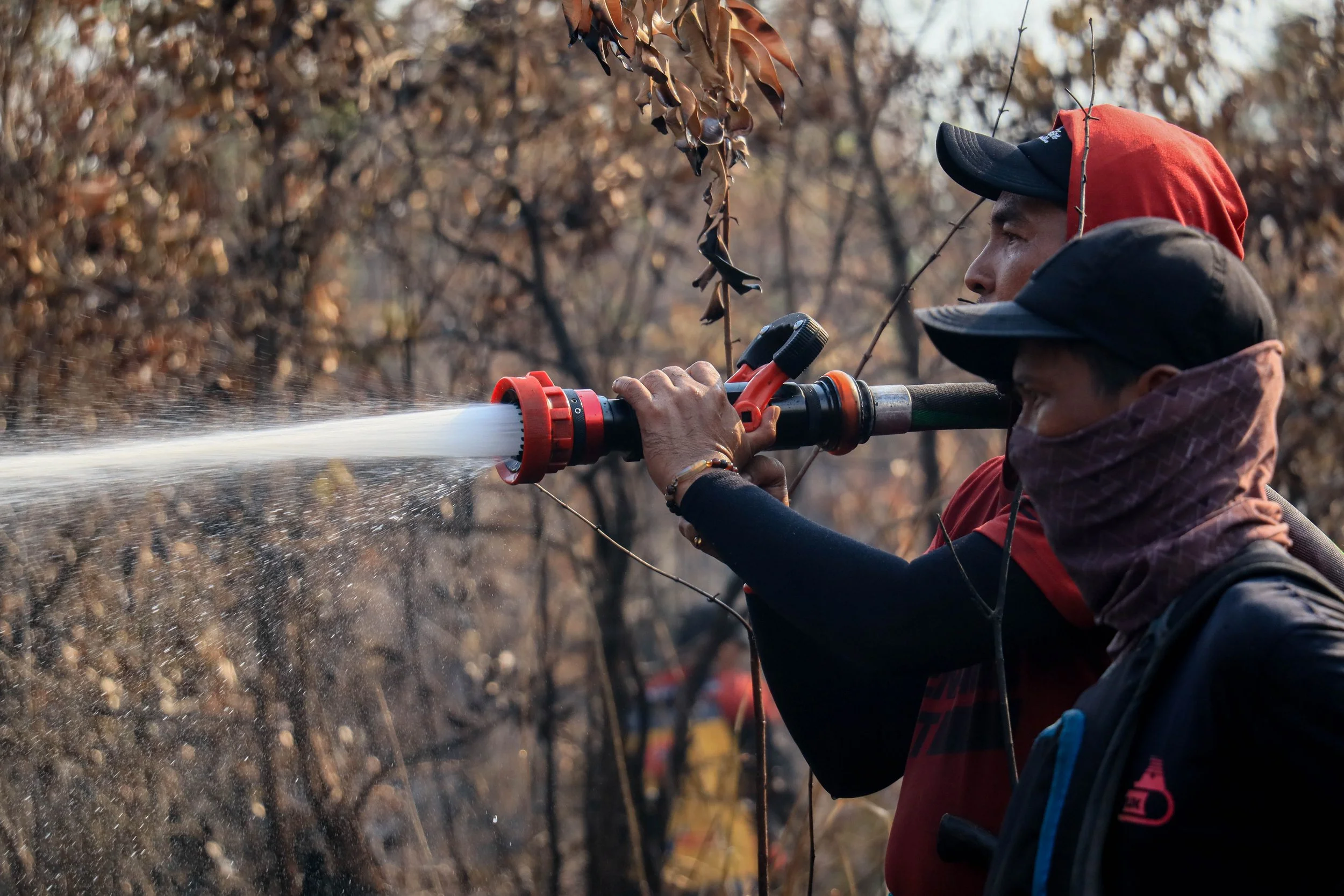
Firefighters in Sebangau National Park work to contain fires and protect one of the largest protected populations of Bornean Orangutans. Photo Credit: Borneo Nature Foundation
In September 2026, the IUCN SSC Primate Specialist Group called for urgent international support, warning of the growing threat to apes and their habitats across Kalimantan.
ASAP’s Rapid Action Fund provides financial support to eligible organisations responding to urgent threats to Critically Endangered land and freshwater vertebrate species and their habitats across Southeast Asia. The Fund remains available to organisations responding to the ongoing fires and other urgent conservation challenges. Details on eligibility and how to apply can be found here.
ASAP is already providing support to two organisations engaged in the protection of Orangutan habitats against the fires in Kalimantan: Sangga Bumi Lestari in the Mendawak Biodiversity Corridor, West Kalimantan, and the Borneo Nature Foundation in Sebangau National Park, Central Kalimantan.
Sangga Bumi Lestari’s mission to secure Orangutan habitat connectivity
The Mendawak Biodiversity Corridor covers approximately 100,000 hectares in West Kalimantan, encompassing peat forests, commercial concessions and community-managed forests. The initiative brings together government agencies, businesses and local communities to protect and reconnect fragmented habitats, including those of the Bornean Orangutan.

Bornean Orangutans (Pongo pygmaeus) captured by camera traps installed by Sangga Bumi Lestari in the Mendawak Biodiversity Corridor, West Kalimantan, Indonesia. Photo Credit: Sangga Bumi Lestari
Fires began spreading across the southwestern part of the corridor in July 2026, affecting peat forests within a commercial forestry concession and four adjoining village forests.
Despite extensive firefighting efforts, the fires spread rapidly. By September, approximately 65% of the forest within the four village forests had burned. These forests, which support an estimated 63 Orangutans, have served as refuges for animals displaced by earlier forest clearance in neighbouring areas.
The damage has raised concerns that the remaining habitat may now be divided into two isolated forest blocks, restricting Orangutans’ ability to move between them. Sangga Bumi Lestari has reported increasing numbers of Orangutans entering nearby farming areas, including animals suffering from burns and other health problems. Eight Orangutans have required rescue.
“Orangutans can no longer go anywhere. There are fires everywhere, and they are surrounded,” Mohammad Taufik Hidayat, Sangga Bumi Lestari’s Mendawak Biodiversity Corridor Project Manager, told Mongabay in September 2026.
The organisation is now working to assess how much habitat remains connected and identify areas most vulnerable to further fires.
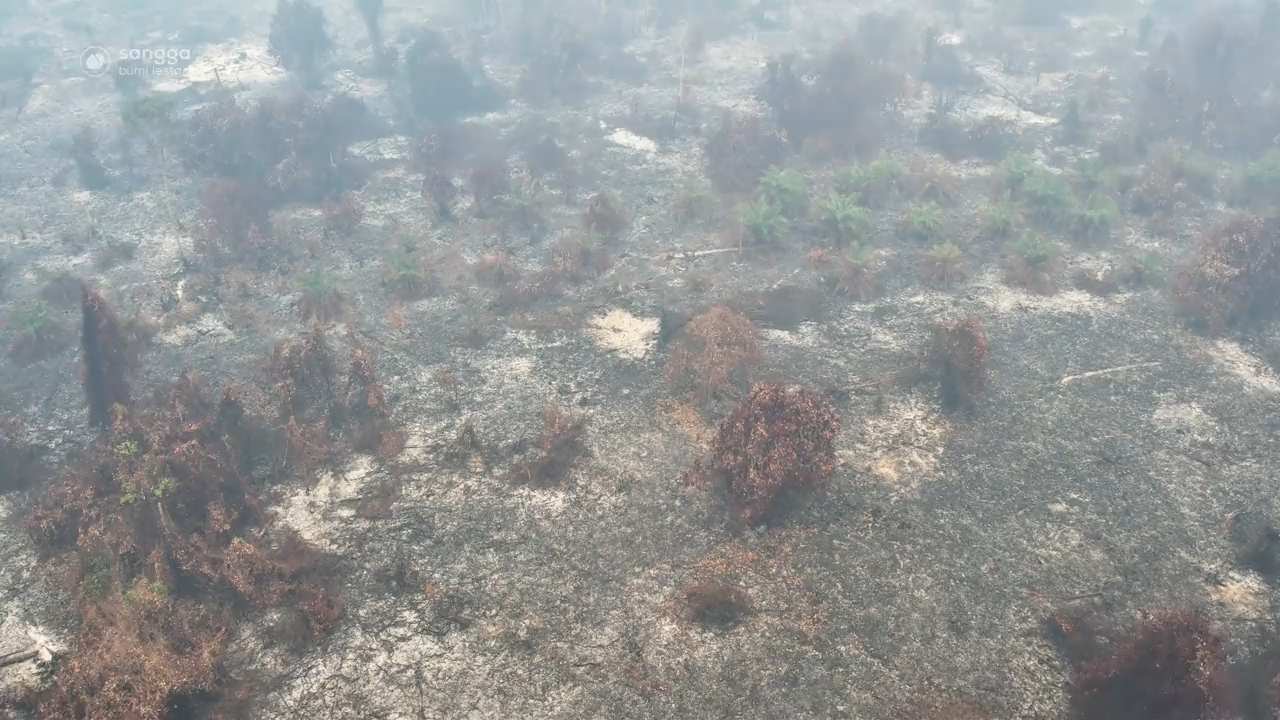
Aerial view of fire-damaged vegetation in the Mendawak Biodiversity Corridor, West Kalimantan, documented during a damage assessment by Sangga Bumi Lestari. Photo Credit: Sangga Bumi Lestari
Finding water has also become a challenge. Firefighting teams working in degraded peatlands need reliable water sources, but some existing sources are difficult to locate or no longer functional.
“The people are there, the equipment is there, but there is no water,” Taufik told Mongabay.
With support from ASAP’s Rapid Action Fund, Sangga Bumi Lestari will assess fire damage and remaining Orangutan habitat, identify and map water sources for firefighting, and survey drainage canals contributing to peatland drying.
The project will also trial canal blocking at one priority location to help retain water in the peatland. The findings will inform a wider rewetting plan to reduce future fire risks and protect the remaining forest connections across the southern Mendawak Biodiversity Corridor.
Borneo Nature Foundation: Emergency support for community firefighting teams
In Central Kalimantan, fires are threatening Sebangau National Park, a 568,700 hectare protected area that supports an estimated 8,000 Bornean Orangutans, the largest protected population of the species. Its peat swamp forests are also home to the Sunda Pangolin, all five of Borneo’s wild cat species and many other threatened animals.
By early September, a fire front stretching more than 30 kilometres had developed along the park’s northeastern boundary, reaching the Sebangau River and crossing into the national park.
In Hiu Putih, fires spreading from neighbouring land destroyed a previously restored forest site and threatened nearby intact forest. Peat fires are difficult to extinguish because they can continue burning underground even after the flames on the surface have disappeared. Borneo Nature Foundation has deployed nine community firefighting teams, comprising 138 trained firefighters from villages surrounding Sebangau, to prevent the fires from spreading further into Orangutan habitat.
The teams are working at several locations along the fire front. At Bangah, firefighters are holding a fire on the opposite bank of the Sebangau River. At Agus Manyan, they are drilling boreholes and wetting the forest edge to prevent flames from entering the forest. Elsewhere, teams have been clearing routes to reach fires where falling water levels have made access by boat increasingly difficult.
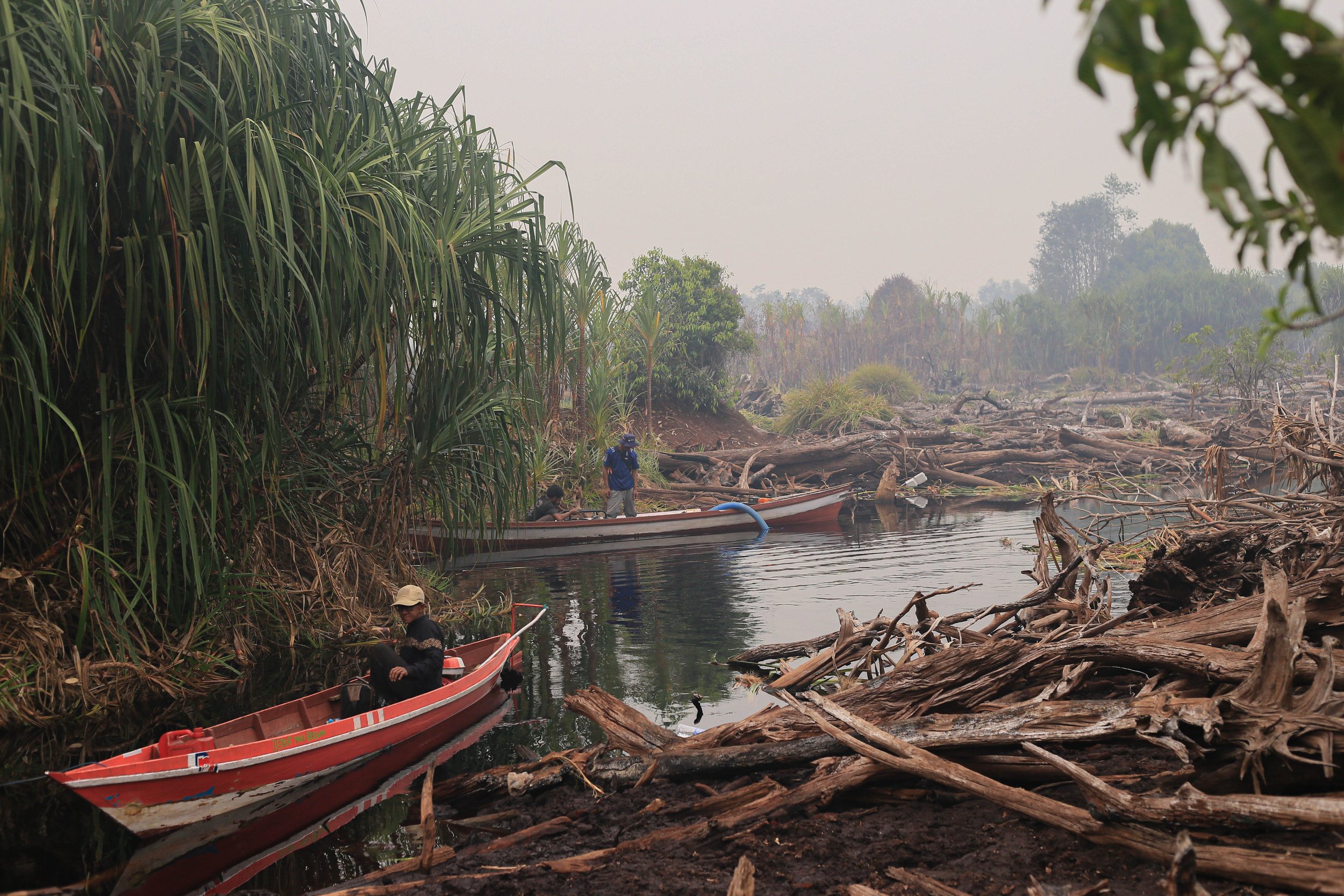
Community firefighting teams monitor fire-affected areas and carry out peatland rewetting efforts in Agus Manyan, near Sebangau National Park, Central Kalimantan, Indonesia. Photo Credit: Renhat Bonxy/Borneo Nature Foundation
Firefighting response draws on years of experience working with communities around Sebangau. During the devastating fires of 2015, the organisation supported just one community firefighting team. Today, its network has expanded to nine teams, working alongside government firefighting agencies, the national park authority and other local stakeholders.
But keeping these teams in the field throughout the fire season requires equipment, protective gear, transport and funds to cover day-to-day operations.
Through ASAP’s Rapid Action Fund, Borneo Nature Foundation is receiving support to sustain its community firefighting operations, helping the teams continue monitoring hotspots, containing fires and protecting vulnerable forest areas.
The priority is to stop the flames before they reach Sebangau’s interior forests, where further damage could destroy Orangutan habitat and displace wildlife.
“Protecting Indonesia’s forests and peatlands protects both apes and the people who share these landscapes,” said Dr Anton Nurcahyo, CEO of Borneo Nature Foundation, in the IUCN SSC specialist groups' September statement.
Rapid support for urgent conservation needs
El Niño is expected to intensify towards the end of 2026, raising concerns about further forest fires. The World Meteorological Organization has warned that the climate event could become one of the strongest on record, with its effects expected to continue into 2027.
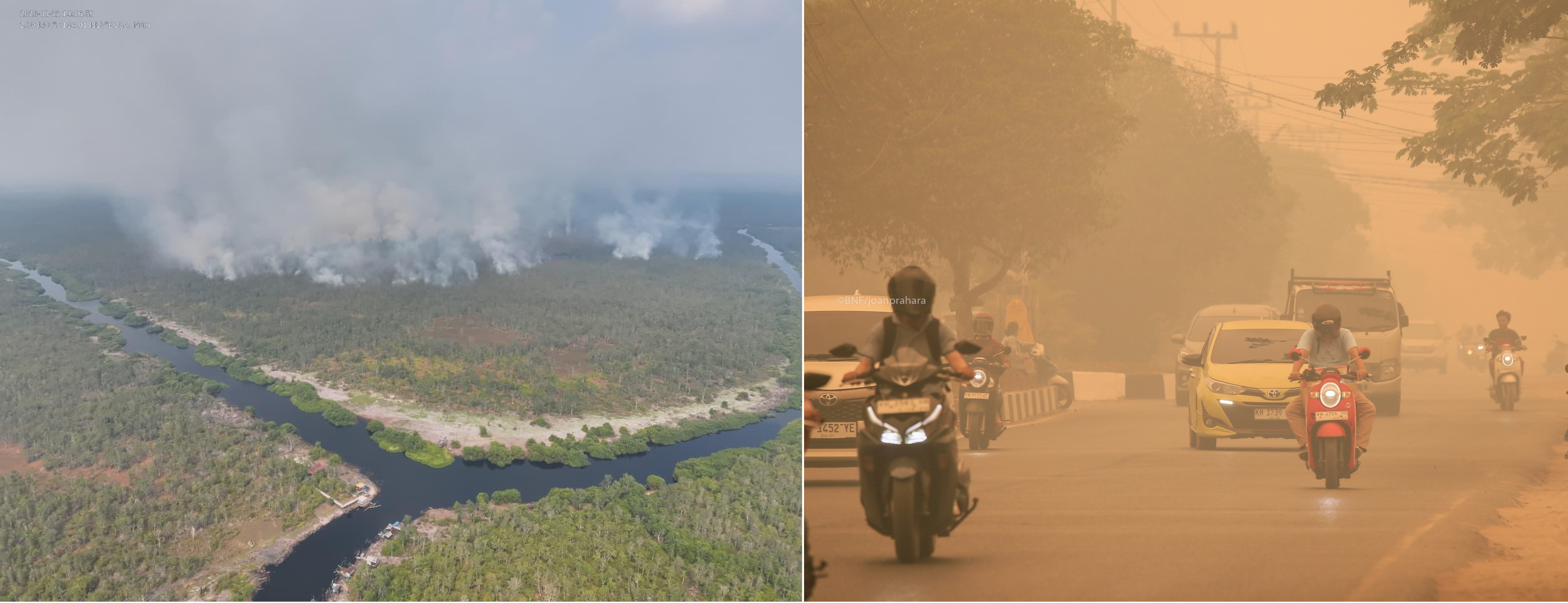
Left: Aerial view of forest and peatland fires near Sebangau National Park, Central Kalimantan. Right: Thick haze from forest fires blankets a street in Palangka Raya, Central Kalimantan, affecting visibility and daily life. Photo Credit: Joan Prahara/Borneo Nature Foundation
The risk of further fires adds to the challenges facing conservation organisations working to protect threatened species and their habitats. ASAP's Rapid Action Fund remains available to eligible ASAP Partners responding to the ongoing fires and other urgent conservation challenges.
For more information about the Rapid Action Fund and how to apply, visit speciesonthebrink.org/rapid-action-fund