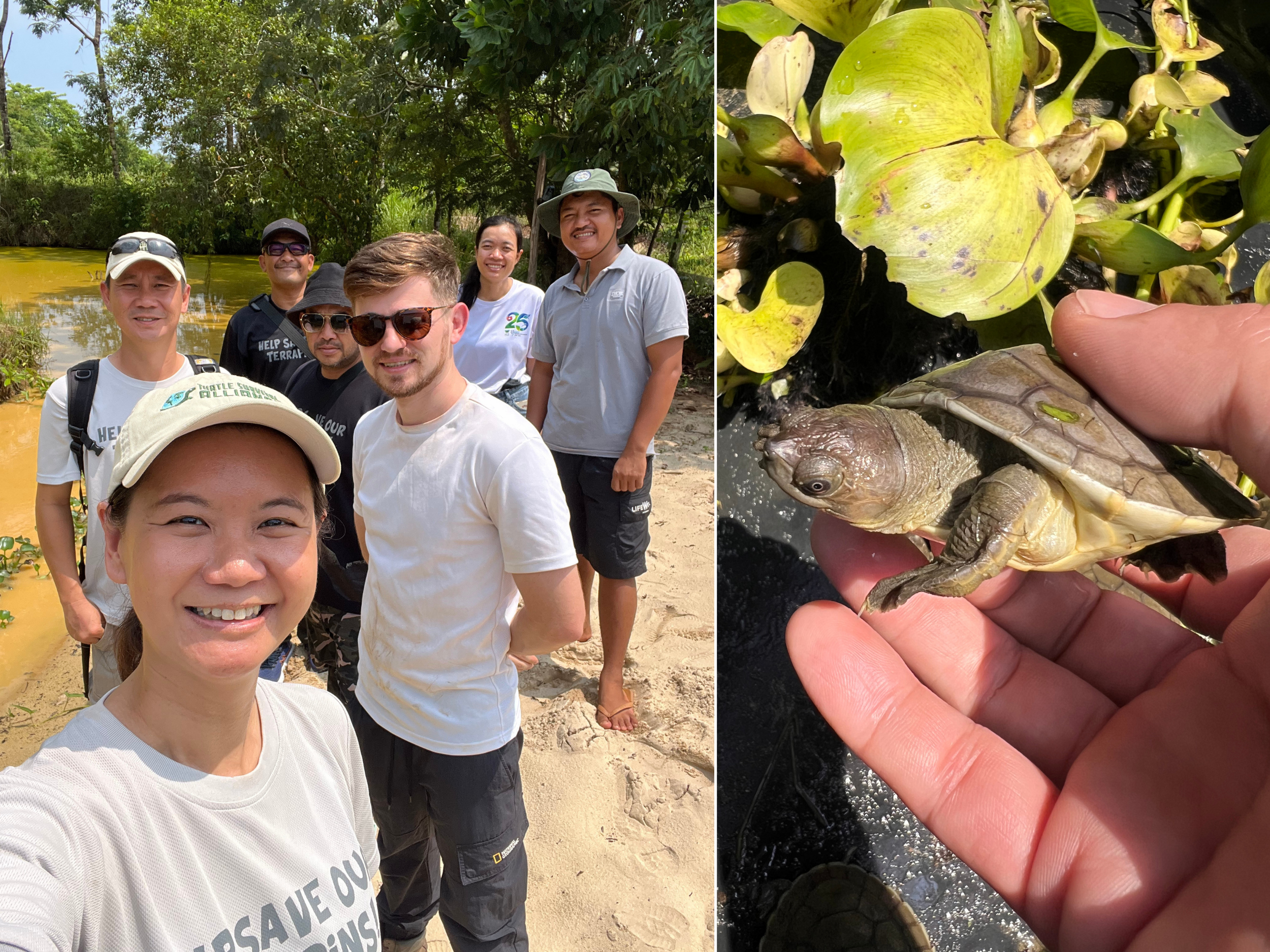
Left: Teams from the Turtle Conservation Society of Malaysia (TCSM) and the Wildlife Conservation Society (WCS) Cambodia take a group selfie at the Koh Kong Reptile Conservation Centre (4 May 2026). Right: A Southern River Terrapin hatchling at the Koh Kong Reptile Conservation Centre. Photo Credit: Chen Pelf Nyok
Could the Partner Networking Fund support your organisation?
ASAP's Partner Networking Fund helps conservation organisations exchange knowledge, learn from one another and build lasting connections. Interested in exploring what it could support for your organisation?
12 November 2026
Conservation practitioners protecting threatened species often face similar challenges, yet opportunities to learn directly from one another can be limited. Through its Partner Networking Fund, the Asian Species Action Partnership (ASAP) supports exchanges between conservation organisations to share knowledge, experiences and practical approaches to species conservation.
In May 2026, the fund supported a visit by the Turtle Conservation Society of Malaysia (TCSM) to the Wildlife Conservation Society (WCS) Cambodia. Both organisations work to protect the Critically Endangered Southern River Terrapin.
“Since Malaysia and Cambodia are the only two countries that still have wild populations, learning from each other is incredibly important... This partnership helps all of us do better for Southern River Terrapin. It builds the skills, connections, and confidence we need to strengthen our conservation programmes and improve the chances of this species surviving in the wild. ”
Historically found across Southeast Asia, the Southern River Terrapin has experienced significant population declines due to egg collection, habitat loss, and sand mining. Established in 2011, the Turtle Conservation Society of Malaysia (TCSM) has released more than 7,000 juvenile terrapins into the rivers of Kemaman, Terengganu. However, understanding what happens to these terrapins after release remains an important challenge.
Chen Pelf Nyok and her team saw an opportunity to learn from WCS Cambodia’s experience in post-release monitoring and explore ways to improve their existing conservation practices.
Pelf travelled to Cambodia with TCSM Field Manager Dylan Wang and two Terrapin Guardians, Hasbullah bin Abd Razak and Samsul Hamid, who work directly on terrapin conservation in Malaysia.
Over four days, the team visited the Koh Kong Reptile Conservation Centre and the Southern River Terrapin Conservation Programme in Sre Ambel.
“Throughout the visit, we observed how our Cambodian counterparts manage egg incubation, head-starting, nest protection, and post-release monitoring,” said Pelf.

Group photo at the entrance to the Koh Kong Reptile Conservation Centre (4 May 2026). Photo Credit: Chen Pelf Nyok
The team also spent time together in the river, discussing their respective challenges and the approaches they had developed through years of protecting the species.
One of the most valuable experiences, Pelf added, took place at a soft-release pen in Sre Ambel, where the Malaysian team gained hands-on experience tracking released terrapins.
“These observations have given us ideas to review and improve our own conservation practices in Malaysia, particularly as we begin long-term monitoring of released terrapins using telemetry,” Pelf explained.
Telemetry uses electronic transmitters to track released terrapins, allowing conservationists to study their movements, habitat use and survival over time. TCSM hopes to use this information to improve its conservation practices and guide future releases.
The visit also gave Terrapin Guardians Hasbullah and Samsul Hamid an opportunity to exchange experiences with Cambodian conservation practitioners. Both are involved in nest protection and field monitoring in Malaysia and could compare their own practices with those used in Cambodia.
“Being able to observe these approaches firsthand hopefully provided insights that would not have been possible through third-party sharing,” Pelf reflected.
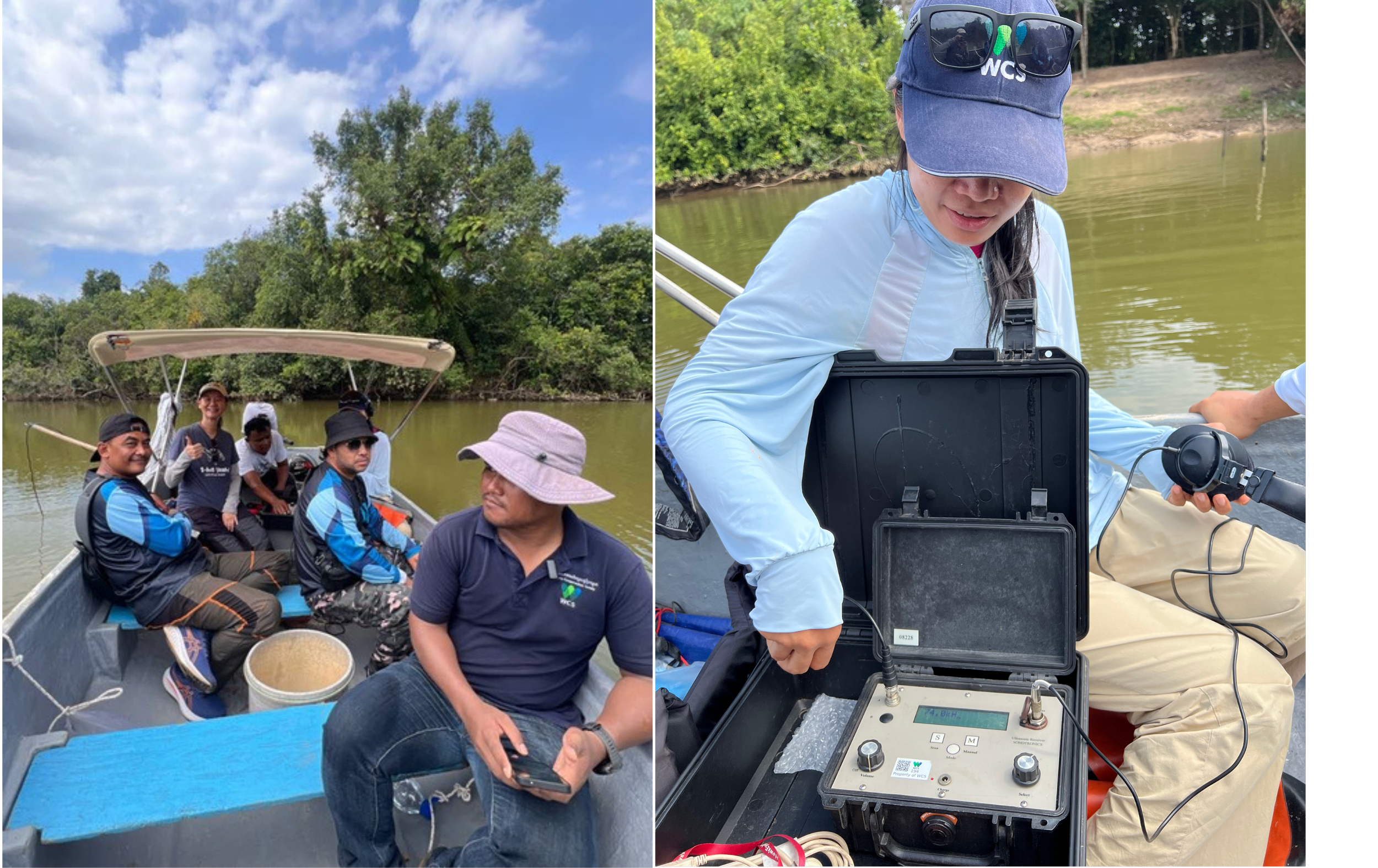
Left: The TCSM team joins WCS Cambodia to track released terrapins at the soft-release pen (5 May 2026). Right: Chakriya from WCS Cambodia demonstrates her terrapin-tracking routine (5 May 2026). Photo Credit: Chen Pelf Nyok
Sustaining the Collaborations
The two organisations also held dedicated sharing sessions to compare conservation approaches and discuss possible collaboration in population monitoring, research, and data sharing.
Most participants were meeting for the first time. According to Pelf, apart from herself and Phun Torn from WCS Cambodia, the team members had arrived as strangers. By the end of the visit, they had built professional relationships that would allow them to continue exchanging knowledge, sharing experiences and supporting one another's conservation work long after the visit.
“Working with WCS Cambodia demonstrated to the team that although we work in different countries, we face many of the same conservation challenges. By sharing experiences, comparing methods, and discussing future collaborations, we have built a stronger regional network that will benefit the long-term recovery of the Southern River Terrapin across its remaining range,” said Pelf.
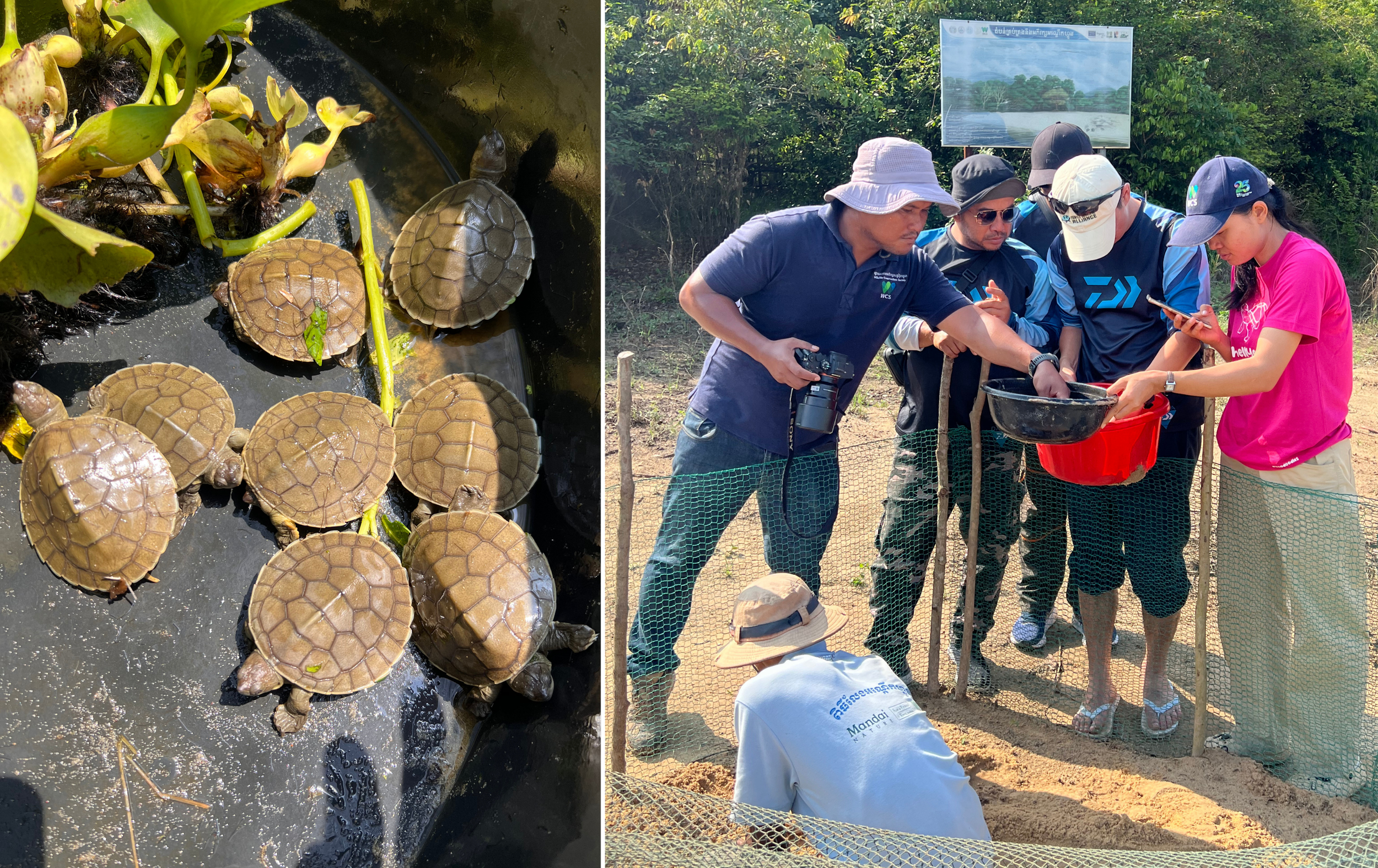
Left: Southern River Terrapin hatchlings at the Koh Kong Reptile Conservation Centre (4 May 2026). Right: TCSM and WCS Cambodia teams examine newly hatched terrapins for abnormalities (5 May 2026). Photo Credit: Chen Pelf Nyok
The visit also helped TCSM identify priorities for its next phase of conservation work. Building on its existing nest protection, head-starting and release programmes, the organisation plans to expand long-term telemetry monitoring.
Both organisations agreed to maintain regular contact and explore opportunities for future collaboration, including the possibility of jointly organising a regional Batagur symposium. Pelf also hopes that future exchanges will give Terrapin Guardians more opportunities to meet fellow conservation practitioners and share their knowledge.
“While I may have the privilege to attend conferences and meet other Batagur researchers, I feel that it is equally important that our Terrapin Guardians be given this opportunity as well, not just for them to learn from the others, but also for them to be recognised as our local partners, and for others to learn from them.”
The Value of Peer-to-Peer Learning
The experience in Cambodia gave TCSM practical insights for its conservation work in Malaysia and established connections with fellow practitioners working to protect the same species. Through its Partner Networking Fund, ASAP supports opportunities like this, allowing conservation organisations to exchange expertise and develop relationships that can support their work over time.
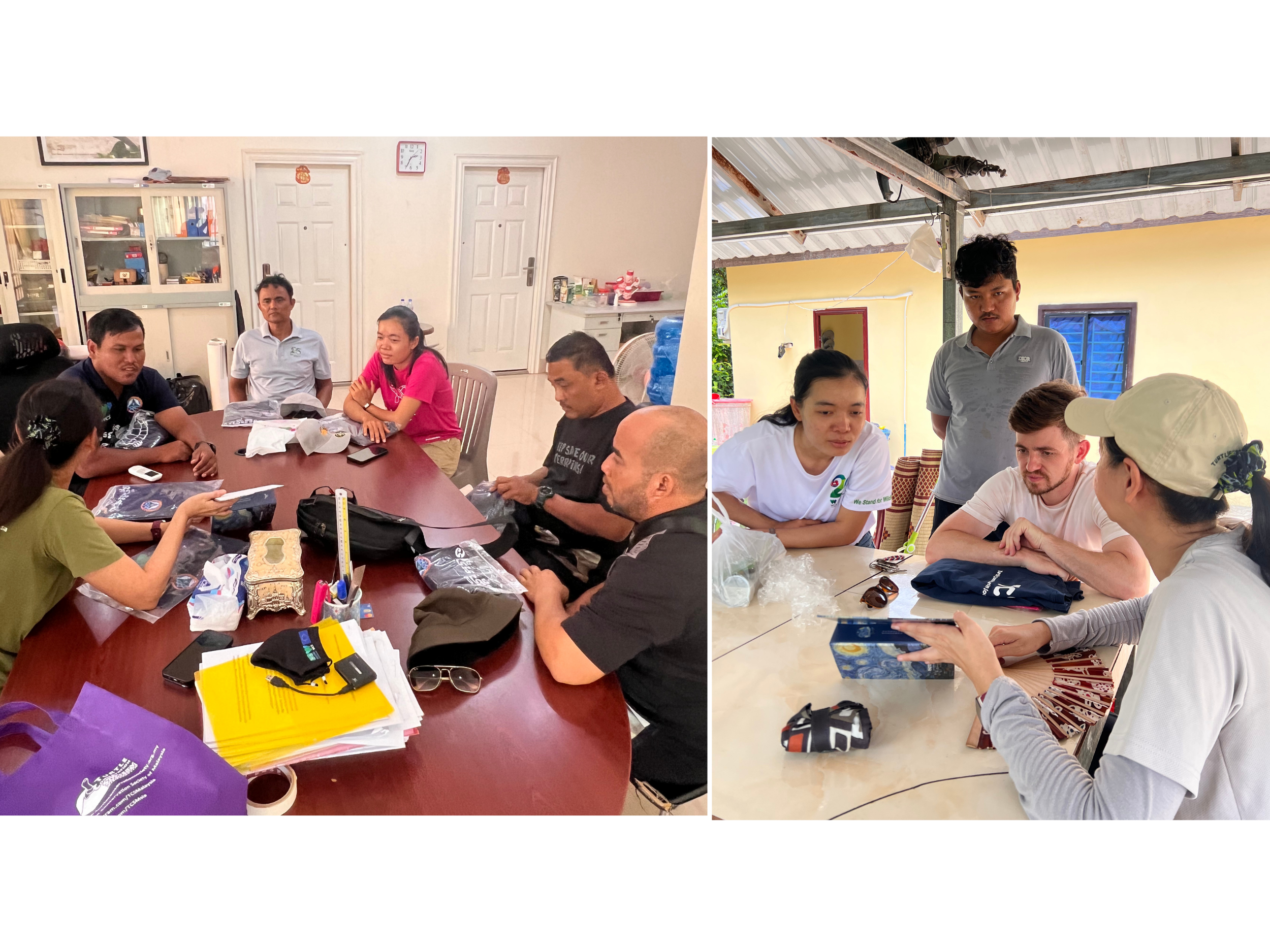
Left: TCSM and WCS Cambodia teams during a sharing and discussion session at the WCS Cambodia office (5 May 2026). Right: TCSM and WCS Cambodia teams during a knowledge-sharing session at the Koh Kong Reptile Conservation Centre (4 May 2026). Photo credit: Dylan Wang.
“The ASAP Partner Networking Fund gave us the opportunity to learn directly from the only other country with a surviving wild population of the Southern River Terrapin. This type of peer-to-peer exchange is invaluable because it allows conservation practitioners to share practical solutions that cannot be learned from publications alone,” said Pelf.
ASAP Partners interested in applying for the Partner Networking Fund can find more information here: speciesonthebrink.org/partner-networking